Mold statistics are easy to find and hard to trust. Most pages repeat the same few numbers without saying who counted them. This page goes back to the counters: health agencies, housing surveys, courts and peer-reviewed studies. Every figure is dated, and every link goes to the source itself.
The first thing the data show is that nobody agrees how common mold is, because it is rarely measured. Reviews put dampness and mold at 18% to 50% of buildings (Environmental Health Perspectives, Jun 2011). The second is that the health case rests on damp buildings as a whole, and the fear built around one black species is not backed by the evidence.
The third is the one that matters on a service call. Mold needs water, and water comes from leaks, floods and humid air that heating and cooling equipment fails to remove. The sections below end with that link between humidity control and equipment.
Key Takeaways
- Dampness affects 10 to 50% of indoor environments in Europe, North America, Australia, India and Japan (WHO Europe, Jul 2009).
- 7.7 million English households (31%) reported condensation, damp or mould in 2024-25 (English Housing Survey, Jul 2026).
- 15.6% of the EU population lived in a dwelling with a leaking roof, damp walls, damp floors or rot in 2023 (Eurostat, Aug 2026).
- 18.1% of New Zealand homes were damp at least some of the time in 2023 (Stats NZ, Jun 2025).
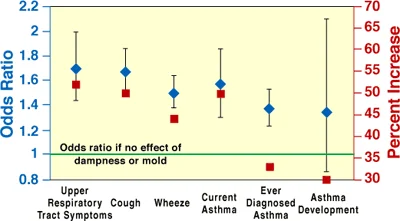
- Dampness and mold in homes are tied to roughly 30 to 50% higher odds of respiratory and asthma outcomes (Fisk et al., Aug 2007).
- An estimated 21% of current US asthma is attributable to dampness and mold (Berkeley Lab, Oct 2026).
- A link between Stachybotrys chartarum, the so-called black mold, and infant lung bleeding has not been proven (CDC Mold, May 2024).
- A two-year-old boy died of a severe respiratory condition caused by prolonged mould exposure at home in Rochdale, England (HM Coroner, Nov 2022).
- Fungal disease causes an estimated 3.8 million deaths worldwide each year (Denning, Jan 2024).
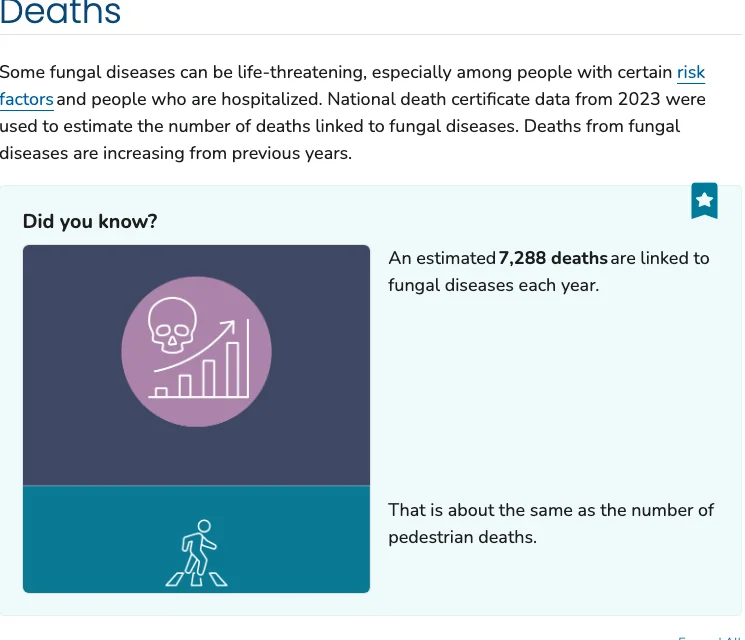
- An estimated 7,288 US deaths each year are linked to fungal diseases (CDC Fungal Diseases, Sep 2026).
- Dampness and mold in US homes cost $15.1 billion in 2014 for asthma illness alone (Berkeley Lab, Oct 2026).
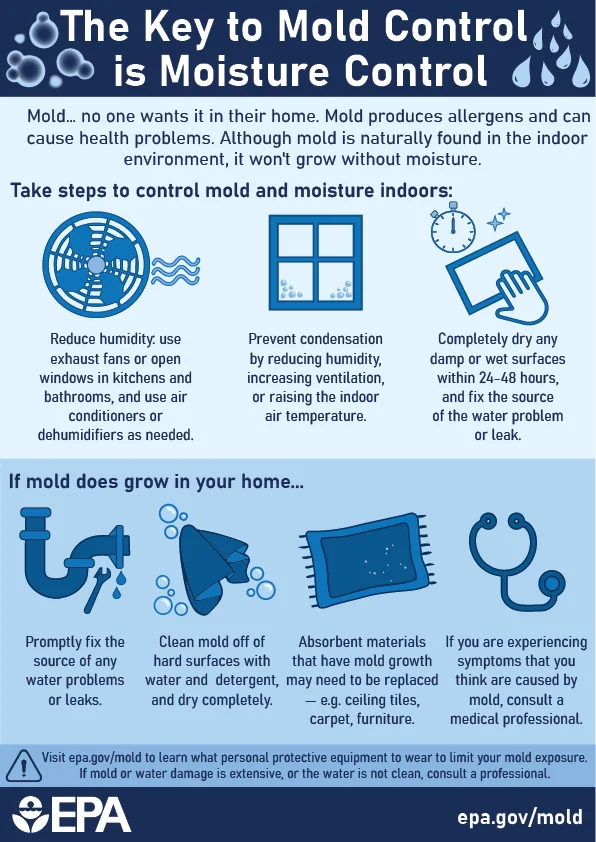
- Wet materials should be dried within 24 to 48 hours to stop mold growth (EPA, Sep 2012).
- Building loads in low-load homes in humid climates ran below a sensible heat ratio of 0.6 for much of the year (NREL and ORNL, Apr 2018).
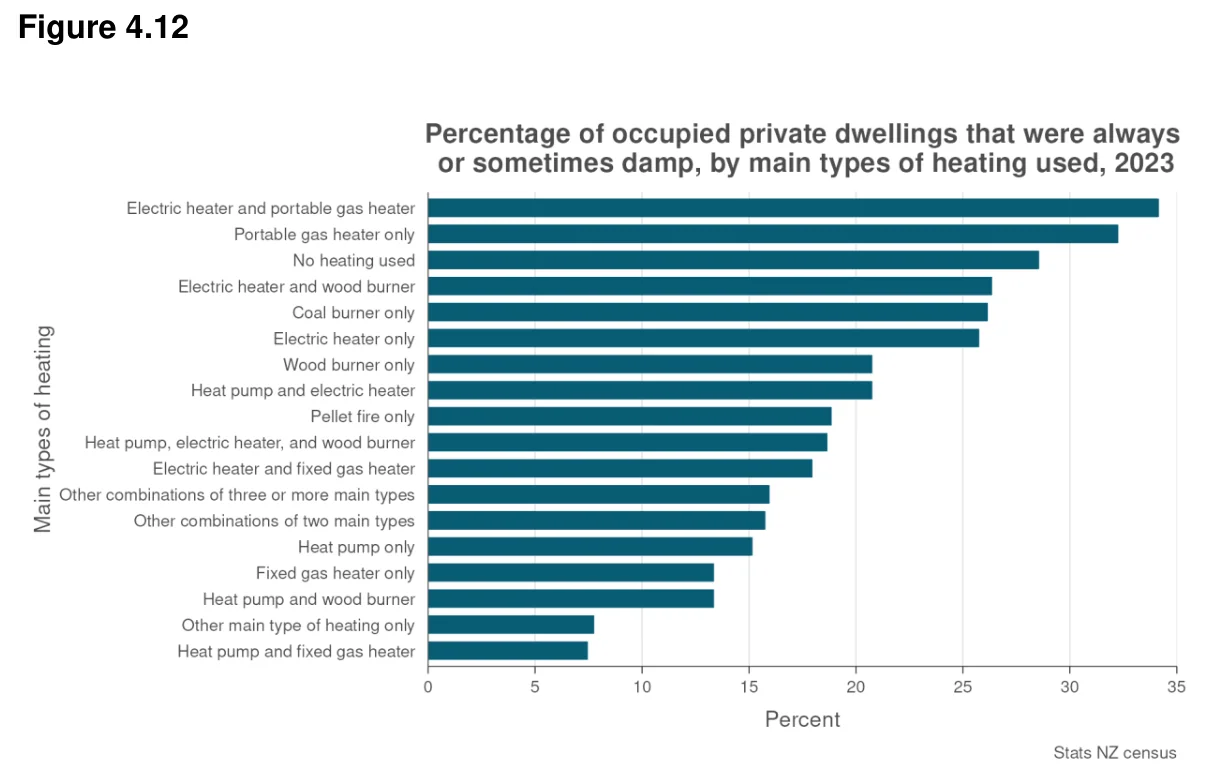
- Homes in New Zealand that relied on a portable gas heater alone were damp 32.2% of the time, against 7.4% for heat pump plus fixed gas heater homes (Stats NZ, Jun 2025).
How Common Is Mold in US Homes and Buildings?
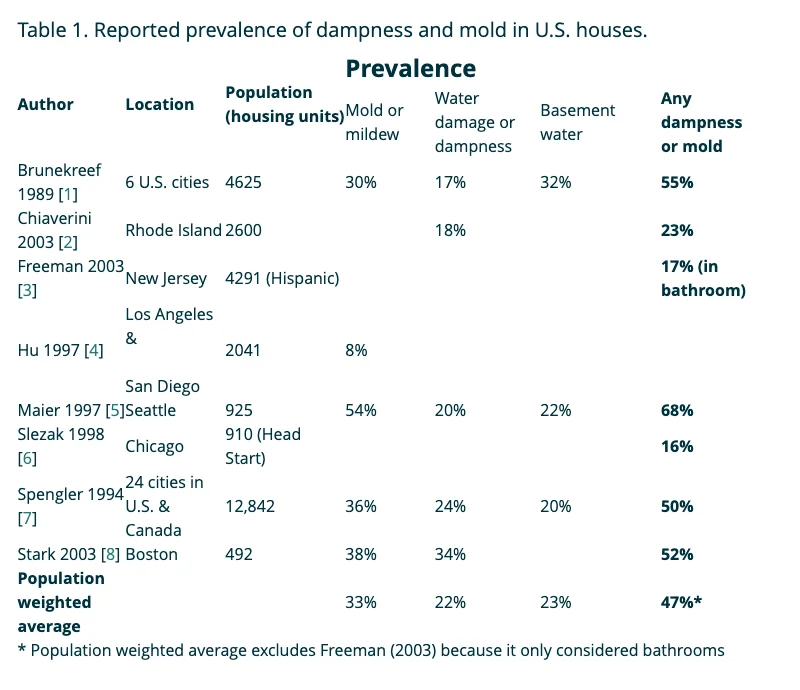
The US does not count mold. Every number below is a regional study, a leak survey or a disaster assessment, and the gap between them is the finding.
Does the US count mold in homes?
- No national database tracks dampness and mold in US houses, and the American Housing Survey did not ask about either (Berkeley Lab, Oct 2026).
- In 2009, 9.9% of US homes had water damage from exterior leakage and 8.1% from interior leakage (Berkeley Lab, Oct 2026).
- Across seven studies, the population-weighted average for any dampness or mold was 47% of homes (Berkeley Lab, Oct 2026).
- The same weighting gave 33% of homes with mold or mildew, 22% with water damage or dampness and 23% with basement water (Berkeley Lab, Oct 2026).
How much do dampness findings vary by city?
- The largest study covered 12,842 homes in 24 US and Canadian cities and found dampness or mold in 50% of them (Berkeley Lab, Oct 2026).
- In Seattle, 54% of 925 homes had mold or mildew and 68% had some dampness or mold (Berkeley Lab, Oct 2026).
- In Boston, 52% of 492 homes had dampness or mold (Berkeley Lab, Oct 2026).
- Across 6 US cities, 32% of 4,625 homes had basement water (Berkeley Lab, Oct 2026).
- In Rhode Island, 23% of 2,600 homes had dampness or mold, and in Chicago Head Start homes the figure was 16% (Berkeley Lab, Oct 2026).
How common are leaks in offices and flooded homes?
- A survey of 100 US office buildings found past water damage in 85% and current leaks in 45% (Berkeley Lab, Oct 2026).
- Past water damage was recorded in 50% of roofs and 71% of occupied space in those offices (Berkeley Lab, Oct 2026).
- After Hurricane Katrina, an assessment of New Orleans area homes found some mold contamination in an estimated 46%, more than 100,000 homes (CDC MMWR, Jun 2006).
- About 17% of those homes, roughly 40,000, had heavy mold contamination (CDC MMWR, Jun 2006).
- Each year about one in 60 insured US homes has a property damage claim from water damage or freezing (Triple-I, Oct 2026).
How Common Is Mold in Europe and England?
Europe measures damp better than the US does, because governments ask about it in routine surveys. The answer is that damp follows poverty, cold and building age more than it follows climate.
How many Europeans live in damp homes?
- In many EU countries, 20 to 30% of households have problems with dampness (WHO Europe, Jul 2009).
- Among people below the EU at-risk-of-poverty threshold, 23.6% lived in a damp or leaking dwelling in 2023, against 14.1% of people above it (Eurostat, Aug 2026).
- Cyprus reported 32.1% and Portugal 29.0% in 2023 (Eurostat, Aug 2026).
- Finland reported 5.3% and Sweden 4.8% (Eurostat, Aug 2026).
- Spain reported 23.0% and France 21.1%, while Italy reported 17.1% and Germany 16.0% (Eurostat, Aug 2026).
- Among EU children under 18, 18.0% lived in such a dwelling, and 27.0% of those below the at-risk-of-poverty threshold (Eurostat, Aug 2026).
What do European home inspections find?
- The European Community Respiratory Health Survey studied 7,127 homes in 22 centers and inspected 3,118 of them (Norbäck et al., Mar 2017).
- Residents reported water damage in 10%, damp spots in 21% and mold in 16% of homes in the past year (Norbäck et al., Mar 2017).
- Inspectors observed dampness in 19% and mold in 14% of the homes they visited (Norbäck et al., Mar 2017).
- Each 10°C of higher ambient temperature raised the odds of self-reported mold by a factor of 2.28 (Norbäck et al., Mar 2017).
- Outdoor relative humidity was not associated with indoor dampness and mold, while older buildings had more of both (Norbäck et al., Mar 2017).
How many English homes have damp or mould?
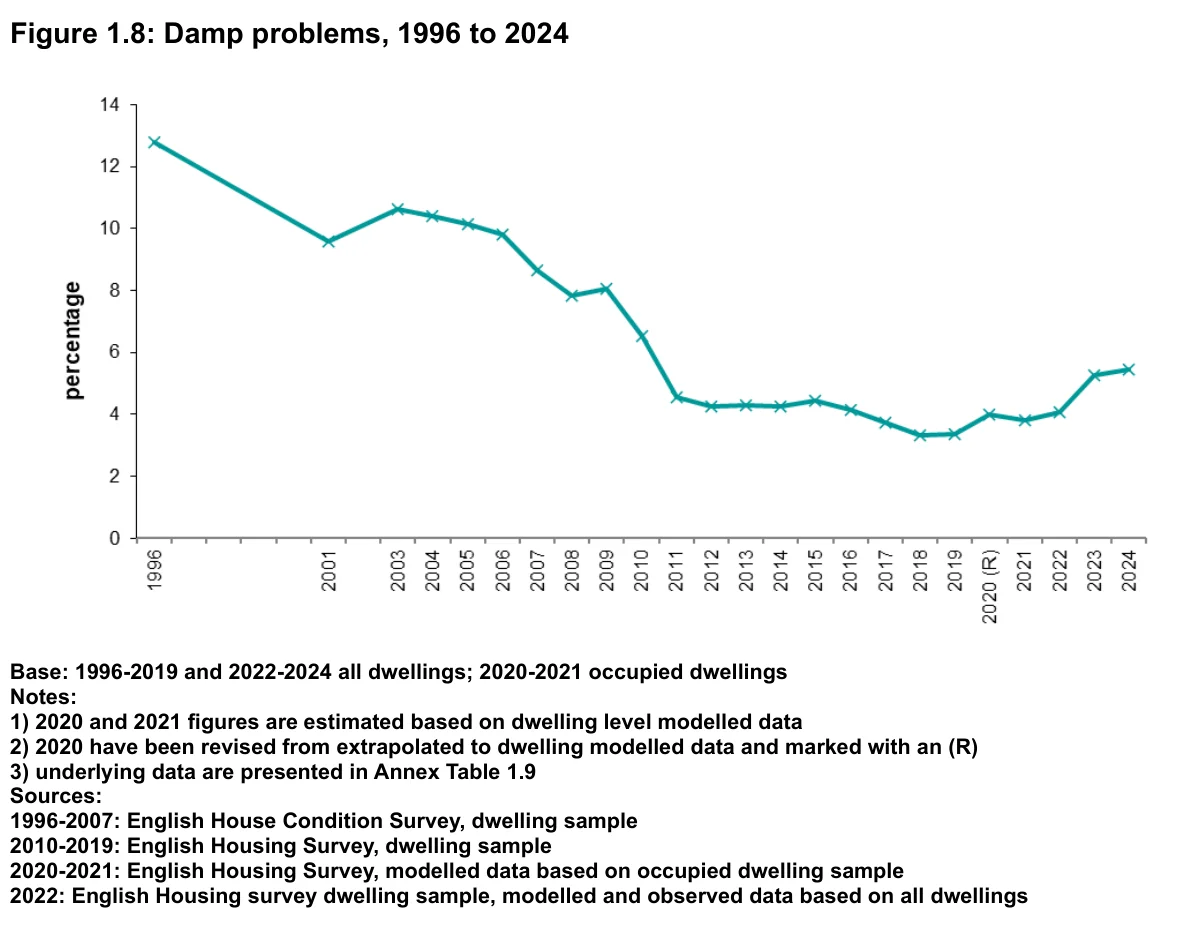
- Surveyors found a damp problem in 1.4 million English dwellings (5%) in 2024, up from 2022 (English Housing Survey, Jan 2026).
- Damp was found in 10% of private rented homes, 7% of social rented homes and 4% of owner-occupied homes (English Housing Survey, Jan 2026).
- Severe condensation (3%) was more common than penetrating damp (2%) or rising damp (1%) (English Housing Survey, Jan 2026).
- Of the dwellings with inadequate ventilation, which were 1% of all dwellings, 60% had a problem with damp (English Housing Survey, Jan 2026).
Who in England lives with damp?
- Households themselves reported damp problems far more often than surveyors recorded them: 47% of private renters, 46% of local authority renters, 39% of housing association renters and 24% of owner occupiers (English Housing Survey, Jul 2026).
- Dependent children living in damp homes rose from 0.8 million (7%) in 2022 to 1.0 million (9%) in 2024 (English Housing Survey, Jul 2026).
- In 2024, 3.2 million households (13%) said they could not keep warm in winter (English Housing Survey, Jul 2026).
- Of those households, 58% reported a damp problem, against 27% of households that could keep warm (English Housing Survey, Jul 2026).
- Among local authority renters who could not keep warm, 71% reported damp, against 38% of those who could (English Housing Survey, Jul 2026).
How Common Is Mold in New Zealand Homes?
New Zealand asks about damp and visible mould in its census, so it can show change over time and who bears the problem. The change is good news. The gap between groups is not.
How has dampness changed since 2018?
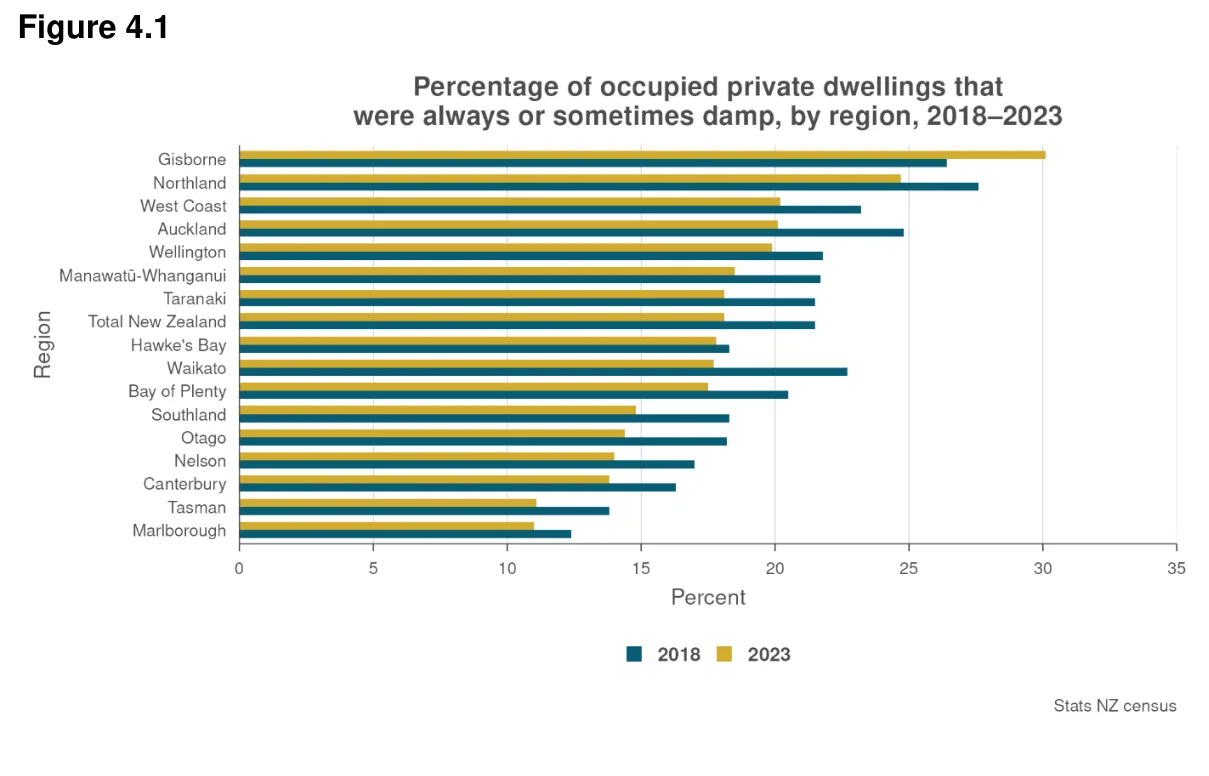
- The count fell from 318,891 damp homes (21.5%) in 2018 to 288,252 in 2023 (Stats NZ, Jun 2025).
- Homes with visible mould larger than A4 size, always or sometimes, fell from 16.9% (252,855) to 14.0% (223,959) (Stats NZ, Jun 2025).
- Always-damp homes were 2.3% (36,801), down from 3% (Stats NZ, Jun 2025).
- Homes always showing mould larger than A4 size were 3.5% (55,896), down from 4.3% (Stats NZ, Jun 2025).
- Gisborne rose from 26.4% to 30.1% damp, and from 21.2% to 23.4% mouldy (Stats NZ, Jun 2025).
- Apart from the Chatham Islands, the Wairoa district had the highest dampness at 36.1% (Stats NZ, Jun 2025).
Which New Zealanders live with damp and mould?
- In 2023, 35.1% of Māori and 39.0% of Pacific peoples lived in damp housing, against 18.3% of people of European ethnicity and 17.0% of people of Asian ethnicity (Stats NZ, Jun 2025).
- Visible mould larger than A4 size was reported by 35.5% of Pacific peoples, 28.3% of Māori and 13.8% of Europeans (Stats NZ, Jun 2025).
- 46% of disabled people had a cold, damp or mouldy home, against 36% of non-disabled people (Stats NZ, Jun 2025).
- For disabled children aged 0 to 14, the share was 55%, against 38% for non-disabled children (Stats NZ, Jun 2025).
What Does Mold Do to Your Health?
The health evidence is strongest for breathing problems, and it is about damp buildings as a whole. Nobody has shown that one species is the culprit.
Is there strong evidence that damp homes affect breathing?
- The Institute of Medicine found sufficient evidence in 2004 that indoor mold exposure links to upper respiratory symptoms, cough and wheeze in healthy people, and to asthma symptoms in people with asthma (CDC Mold, Sep 2024).
- WHO’s panel found that occupants of damp or moldy buildings have up to a 75% greater risk of respiratory symptoms and asthma (WHO Europe, Jul 2009).
- That panel was 36 experts, working for two years, and it reviewed more than 100 studies (WHO Europe, Jul 2009).
- WHO estimated that 13% of childhood asthma in developed countries of its European Region could be attributed to damp housing (WHO Europe, Jul 2009).
- A later review screened 354 articles and used 103 studies, and found that evidence strongly suggested dampness or mold causes asthma attacks in children (Environmental Health Perspectives, Jun 2011).
How much extra risk do damp homes carry?
- Central odds ratios for the health outcomes ranged from 1.34 to 1.75, and the confidence interval excluded no effect in nine of ten cases (Fisk et al., Aug 2007).
- A pooled analysis of asthma onset found summary estimates of 1.50 and 1.31, depending on which study estimates were used (Quansah et al., Nov 2012).
- The highest-estimate effect was 1.99 for infants, 1.30 for children and 1.19 for adults (Quansah et al., Nov 2012).
- Studies that inspected the home found an effect of 2.24, against 1.29 for studies that relied on residents’ reports (Quansah et al., Nov 2012).
- A 2024 review of 21 case-control studies found mouldy homes raise childhood asthma risk by 53% (95% interval 42 to 65%) (Varga et al., Jul 2024).
- The same review found a smaller 15% rise (1 to 31%) across 11 cohort studies (Varga et al., Jul 2024).
- Meta-analyses found 30 to 70% higher odds of asthma development with four of five dampness and mold indicators (Berkeley Lab, Oct 2026).
- Bronchitis and respiratory infections rose roughly 30 to 40% among occupants of damp and moldy homes (Berkeley Lab, Oct 2026).
How much US asthma is linked to dampness?
- Dampness and mold accounted for an estimated 4.6 million current asthma cases in the US in 2004, within a range of 2.7 to 6.3 million (Berkeley Lab, Oct 2026).
- In 2023, 27.8 million Americans (8.4%) had current asthma (CDC Asthma Data, Oct 2026).
- Among people with current asthma, 11.75 million (42.3%) had an asthma attack (CDC Asthma Data, Oct 2026).
- Asthma caused 1,009,419 emergency department visits and 131,985 hospital stays in 2023 (CDC Asthma Data, Oct 2026).
- One study estimated that 2.5% of adults with asthma also have allergic bronchopulmonary aspergillosis, about 4.8 million people worldwide (CDC Fungal Diseases, Oct 2026).
How Dangerous Is Black Mold?
Black mold is a nickname with a lot of fear attached. Federal guidance says the color on the wall tells you nothing, and the one famous case does not hold up.
What is black mold?
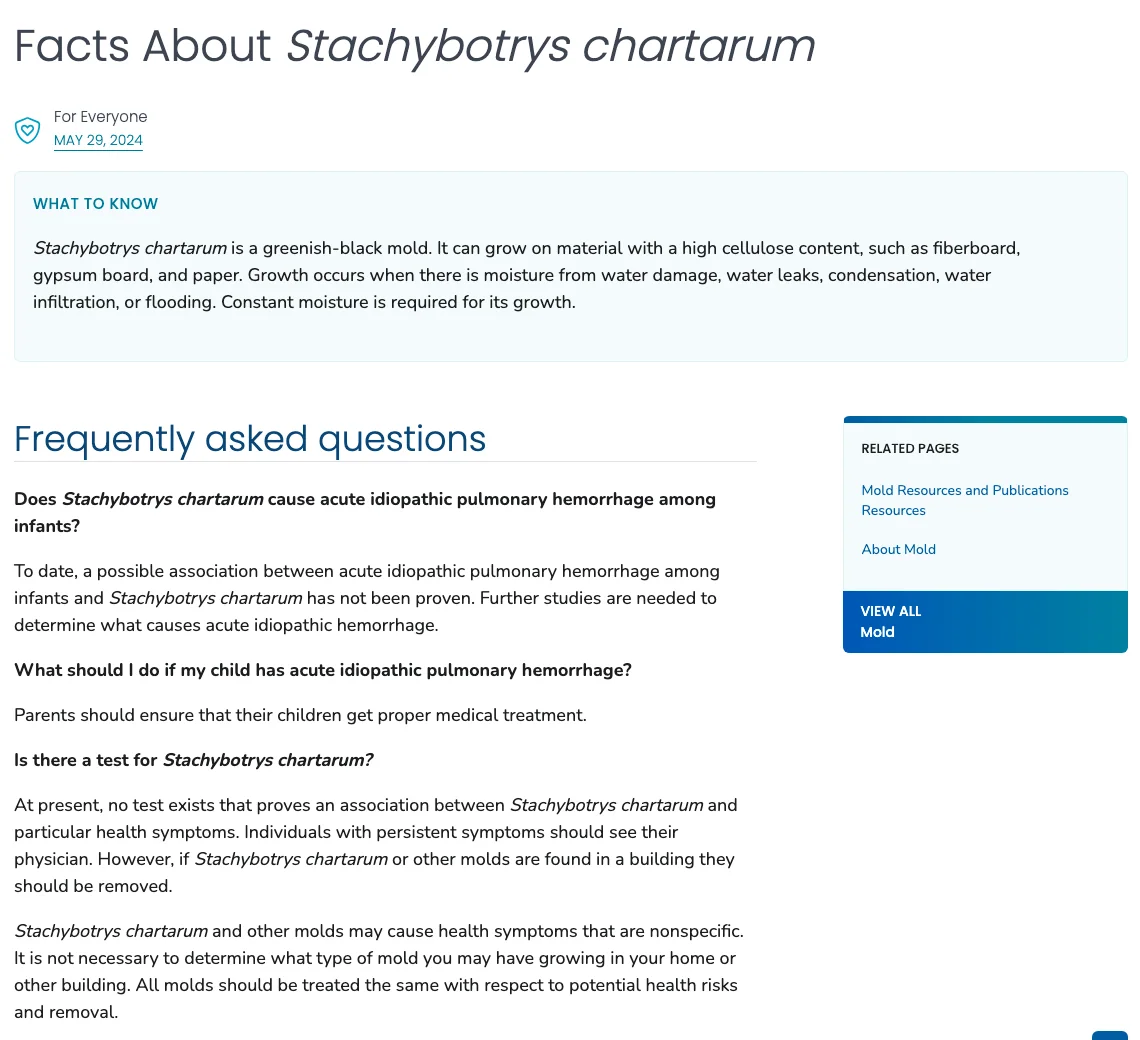
- Stachybotrys chartarum is a greenish-black mold that grows on material high in cellulose, such as fiberboard, gypsum board and paper, and it needs constant moisture (CDC Mold, May 2024).
- Molds come in many colors, including white and black (EPA, Sep 2012).
- Finding Stachybotrys, Aspergillus versicolor or Penicillium well above background levels can point to a moisture problem (CDC MMWR, Jun 2006).
Does black mold cause lung bleeding in infants?
- CDC states that a possible association between Stachybotrys and acute idiopathic pulmonary hemorrhage in infants has not been proven (CDC Mold, May 2024).
- The original report described a cluster of 10 infants in Cleveland, Ohio, between January 1993 and December 1994, with one death (CDC MMWR, Mar 2000).
- The children lived in seven contiguous postal tracts (CDC MMWR, Mar 2000).
- The study’s reported odds ratio was 9.8 for a 10-unit rise in airborne spores per cubic meter (CDC MMWR, Mar 2000).
- Correcting one calculation cut that ratio by 44% to 5.5, and other changes brought it down to 1.9 (CDC MMWR, Mar 2000).
- The Institute of Medicine found inadequate or insufficient evidence on whether Stachybotrys or dampness causes pulmonary hemorrhage (Berkeley Lab, Oct 2026).
Should you test for black mold?
- CDC does not recommend mold testing, because there are no set standards for an acceptable amount of mold in a home (CDC Mold, Sep 2024).
- No test proves a link between Stachybotrys and particular symptoms, and all molds should be treated the same for risk and removal (CDC Mold, May 2024).
- For hard surfaces, CDC allows a bleach solution of no more than 1 cup of laundry bleach in 1 gallon of water (CDC Mold, Sep 2024).
- EPA does not recommend bleach as a routine step in remediation, because dead mold is still allergenic (EPA, Sep 2008).
- EPA sets the minimum protection for small jobs at an N-95 respirator, gloves and goggles (EPA, Sep 2008).
Can Mold Kill You? The Case of Awaab Ishak
Mold can kill a child, and one court record proves it. It is also rare, and that is why the details matter.
What did the coroner find?
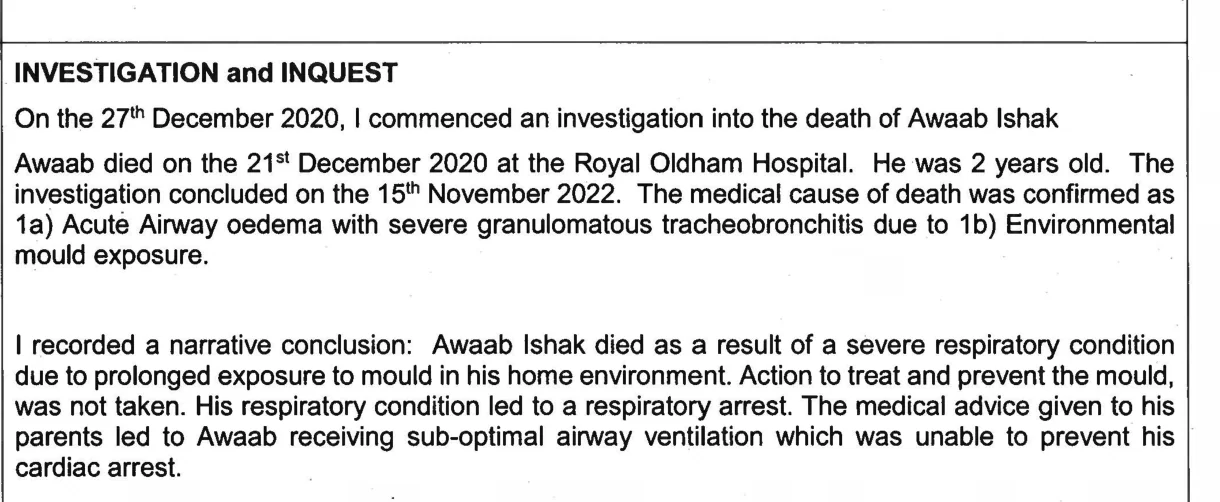
- The medical cause of death was acute airway oedema with severe granulomatous tracheobronchitis, due to environmental mould exposure (HM Coroner, Nov 2022).
- The coroner opened the investigation on 27 December 2020 and closed it on 15 November 2022 (HM Coroner, Nov 2022).
- Mould was reported to the landlord in 2017, three years before the death, and the advice given was to paint over it (HM Coroner, Nov 2022).
- An inspection on 14 July 2020 confirmed mould in the kitchen and bathroom (HM Coroner, Nov 2022).
- In 2021, the Housing Ombudsman examined 410 damp and mould complaints about 142 landlords and found maladministration in 56% (Housing Ombudsman, Oct 2021).
- Maladministration rose to 64% when only complaint handling was counted, and the report made 26 recommendations (Housing Ombudsman, Oct 2021).
What changed in the law afterward?
- Phase 1 of Awaab’s Law took effect on 27 October 2025 for emergency hazards and significant damp and mould hazards in social housing (GOV.UK, Jul 2026).
- Landlords must investigate and fix emergency hazards within 24 hours (GOV.UK, Jul 2026).
- They must investigate potential significant hazards within 10 working days and give the tenant a written summary within 3 working days (GOV.UK, Jul 2026).
- Safety work on a significant hazard must be done within 5 working days of the investigation ending, and preventative work must begin within 12 weeks at the latest (GOV.UK, Jul 2026).
- Phase 2 widens the rules to more hazards on 30 November 2026 (GOV.UK, Jul 2026).
How Many People Die From Mold-Related Illness?
Most deaths from fungi do not come from the mold on a damp wall. They come from invasive infections in people with weak immune systems or damaged lungs. The numbers still show what inhaled spores can do.
How many people die from fungal disease worldwide?
- About 6.5 million people develop an invasive fungal infection each year, and about 2.5 million of the deaths (68%) are directly attributable to the infection (Denning, Jan 2024).
- Invasive aspergillosis affects over 2.1 million people a year, with a crude mortality of 1.8 million (85.2%) (Denning, Jan 2024).
- Chronic pulmonary aspergillosis affects 1,837,272 people a year, with 340,000 deaths (18.5%) (Denning, Jan 2024).
- Fungal asthma affects about 11.5 million people and may contribute to 46,000 asthma deaths a year (Denning, Jan 2024).
- WHO says fungal diseases affect more than 300 million people each year (WHO, Jun 2026).
- Fungi in WHO’s top critical priority group have mortality rates as high as 88% (WHO, Apr 2025).
- In the past decade only four new antifungal drugs were approved in the US, the EU or China (WHO, Apr 2025).
- WHO’s first priority list named 19 fungi as the greatest threat to public health (WHO, Oct 2022).
How deadly is aspergillosis in the US?
- Aspergillosis is not a reportable infection in the US, so case counts are estimates (CDC Fungal Diseases, Oct 2026).
- Nearly 15,000 aspergillosis-associated hospitalizations occurred in 2014, at an estimated cost of $1.2 billion (CDC Fungal Diseases, Oct 2026).
- Hospitalizations for invasive aspergillosis rose an average of 3% a year from 2000 to 2013 (CDC Fungal Diseases, Oct 2026).
- One-year survival after invasive aspergillosis was 59% for solid organ transplant recipients and 25% for stem cell transplant recipients (CDC Fungal Diseases, Oct 2026).
- Most people breathe in Aspergillus spores every day without getting sick (CDC Fungal Diseases, Oct 2026).
- During 2020 and 2021, 5,288 (13.4%) of 39,423 US fungal hospitalizations were COVID-19-associated (CDC EID, Jul 2023).
- Aspergillosis made up 27.8% of COVID-19-associated fungal hospitalizations, against 16.9% of the others (CDC EID, Jul 2023).
- In those COVID-19 cases, 57.6% of aspergillosis hospitalizations and 44.7% of mucormycosis hospitalizations ended in death (CDC EID, Jul 2023).
- Mucormycosis accounts for about 1,920 US hospitalizations a year (CDC Fungal Diseases, Sep 2026).
- All fungal diseases together account for 133,555 US hospitalizations, based on 2021 data (CDC Fungal Diseases, Sep 2026).
How many people die from asthma?
- Asthma was the underlying cause of 3,624 US deaths in 2023, a rate of 10.8 per million people (CDC Asthma Data, Oct 2026).
What Does Mold Cost in Health Care and Damage?
The bill is mostly medical. Water damage claims and cleanup get the attention, but illness is where the larger dollars sit.
What does dampness cost the US health system?
- In 2004, dampness and mold cost $3.5 billion a year in asthma alone, within a range of $2.1 to $4.8 billion (Berkeley Lab, Oct 2026).
- A 2014 estimate put allergic rhinitis from indoor dampness and mold at $3.7 billion (Berkeley Lab, Oct 2026).
- Acute bronchitis added $1.9 billion in 2014 (Berkeley Lab, Oct 2026).
- Asthma-caused mortality added $1.7 billion, within a range of $0.4 to $4.5 billion (Berkeley Lab, Oct 2026).
- All US asthma, from any cause, cost $81.9 billion in 2013 (Nurmagambetov et al., Mar 2018).
- Of that total, $50.3 billion was medical cost, $29 billion was asthma-related mortality and $3 billion was missed work and school (Nurmagambetov et al., Mar 2018).
- The extra medical cost of asthma was $3,266 per person per year, in 2015 dollars (Nurmagambetov et al., Mar 2018).
What do insurers and cleanup guidance say?
- Homeowners water damage and freezing claims run at 1.50 per 100 policies, with an average payout of $15,400 (Triple-I, Oct 2026).
- That loss category includes damage caused by mold, if the policy covers it (Triple-I, Oct 2026).
- EPA treats mold under 10 square feet as a small job, and 10 to 100 square feet as a case for limited containment (EPA, Sep 2008).
- For medium or large jobs, EPA recommends choosing a remediation manager (EPA, Sep 2008).
What do fungal diseases cost overall?
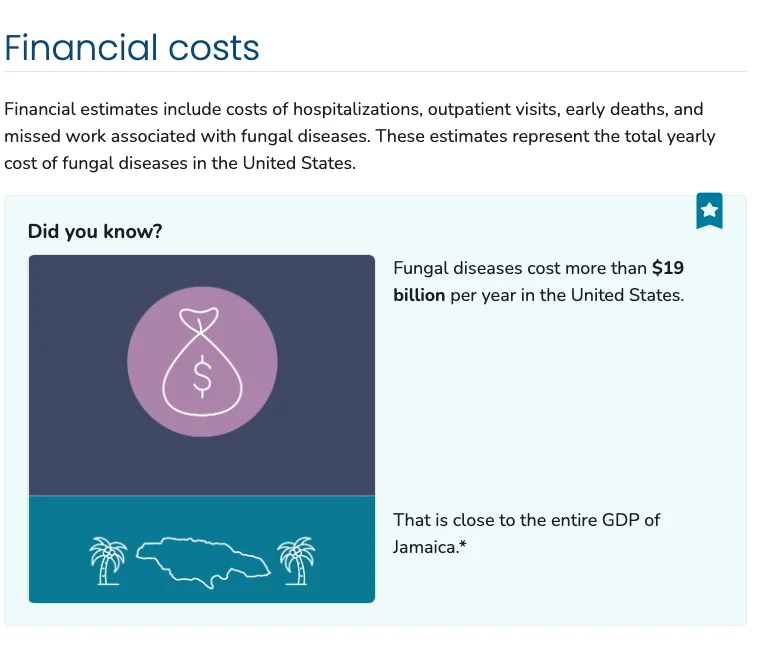
- Fungal diseases cost more than $19 billion per year in the United States, or $19,365,812,130 in CDC’s detailed table (CDC Fungal Diseases, Sep 2026).
- They also account for about 13 million outpatient visits a year, nearly 25 every minute (CDC Fungal Diseases, Sep 2026).
What Makes Mold Grow and How Fast?
Mold needs water and time. Nearly every figure above traces back to a leak, a flood or humid air that stayed in place.
How fast must water damage dry?
- CDC advises assuming a building is contaminated with mold if it was saturated for more than 48 hours (CDC MMWR, Jun 2006).
What humidity keeps mold away?
- EPA advises keeping indoor relative humidity below 60%, and ideally between 30 and 50% (EPA, Sep 2012).
- A humidity meter costs $10 to $50, according to the same guide (EPA, Sep 2012).
- In schools, indoor relative humidity can range from under 10% to over 90% (EPA, Oct 2026).
- Very few schools have equipment designed to control moisture, since heating and cooling equipment is built mainly to control temperature (EPA, Oct 2026).
- Spaces at 50 to 75% relative humidity feel damp and musty, and 75 to 90% means damp spots on walls and floors (ENERGY STAR, Oct 2026).
Does rain or climate drive indoor dampness?
- Each additional 100 mm of precipitation raised the odds of water damage by a factor of 1.12 in European homes (Norbäck et al., Mar 2017).
- The same study found damp spots rose with precipitation by a factor of 1.11 per 100 mm (Norbäck et al., Mar 2017).
How Do Heating and Cooling Systems Affect Mold?
Equipment decides indoor humidity. A system that is too big, or the wrong type, can leave a house cold, clammy and moldy.
Does an oversized air conditioner raise indoor humidity?
- EPA’s checklist says to avoid over-sizing the HVAC system, particularly in high humidity climates (EPA, Oct 2026).
- NREL and ORNL simulated typical and high-efficiency homes in 10 US cities (NREL and ORNL, Apr 2018).
- Every humid climate in that study showed more hours above the humidity limit when the air conditioner was twice the nominal size (NREL and ORNL, Apr 2018).
- An oversized unit runs short cycles, and dehumidification starts only after a delay of 60 to 150 seconds into each cycle (NREL and ORNL, Apr 2018).
- A right-sized system starts with a load number, and the AC tonnage calculator gives a first estimate.
What simple controls cut humidity?
- Lowering the cooling set point by 1.7°C (3.0°F) nearly eliminated high-humidity conditions in every home and climate tested (NREL and ORNL, Apr 2018).
- That fix raises cooling energy use by a large amount and can leave rooms uncomfortably cold (NREL and ORNL, Apr 2018).
- Removing the blower-off delay or lowering the airflow cut humidity with under a 2% rise in cooling energy each (NREL and ORNL, Apr 2018).
How common are dehumidifiers?
- In EIA’s 2015 survey, dehumidifiers were used in 15% of US homes that have air conditioning (EIA, May 2017).
- Almost all homes with a dehumidifier, 93%, also have air-conditioning equipment (EIA, May 2017).
- About half of homes that use dehumidifiers run them no more than four months a year (EIA, May 2017).
- An ENERGY STAR certified dehumidifier uses 20% less energy than a similarly sized conventional unit (ENERGY STAR, Oct 2026).
- For a small or medium room that is slightly to moderately damp, ENERGY STAR recommends a capacity of 20 to 30 pints a day, and 25 to 40 pints for a very damp one (ENERGY STAR, Oct 2026).
- A BTU calculator sizes the heat load, and humid climates also need a check on the moisture load.
Which heating types go with damp homes?
- 34.1% of New Zealand homes heated by an electric heater plus a portable gas heater were damp some or all of the time (Stats NZ, Jun 2025).
- Unheated homes were damp 28.5% of the time (Stats NZ, Jun 2025).
- Homes heated by an electric heater only were damp 25.7% of the time, and by a wood burner only 20.7% (Stats NZ, Jun 2025).
Do school HVAC problems lead to moisture?
- An estimated 41% of US school districts need to update or replace HVAC systems in at least half of their schools, about 36,000 schools (GAO, Jun 2020).
- About 54% of districts need to update or replace multiple building systems (GAO, Jun 2020).
- In about half of the 55 schools GAO visited, officials described HVAC problems such as older systems that leaked and damaged flooring or ceiling tiles (GAO, Jun 2020).
For the energy side of the same equipment, see HVAC energy consumption statistics and residential HVAC replacement statistics.
Methodology and Sources
Each figure comes from the body that produced it: a health agency, a statistics office, a court, a regulator or a peer-reviewed journal. Roundups and competitor pages are not used. Every link was opened and the number was read on the page or in the document. Where a source prints no date, the date shown is the day the page was checked. Some counts cover all fungal disease or all asthma, and the text says so where it matters. This page is refreshed monthly.
Sources
- Berkeley Lab, Prevalence of Building Dampness
- Berkeley Lab, Health Risks of Dampness and Mold in Houses
- Berkeley Lab, Health-Related Costs of Dampness and Mold
- Berkeley Lab, Health Risks of Mycotoxins from Damp Buildings
- CDC, About Mold
- CDC, Facts About Stachybotrys chartarum
- CDC, Most Recent Asthma Data
- CDC, Fungal Disease Burden by the Numbers
- CDC, Data and Statistics on Aspergillosis
- CDC, Aspergillosis Basics
- CDC MMWR, Pulmonary Hemorrhage/Hemosiderosis Among Infants
- CDC MMWR, Mold Prevention Strategies and Possible Health Effects in the Aftermath of Hurricanes and Major Floods
- CDC Emerging Infectious Diseases, Increased Hospitalizations Involving Fungal Infections during COVID-19
- WHO Europe, WHO publishes first indoor air quality guidelines on dampness and mould
- WHO Europe, WHO guidelines for indoor air quality: dampness and mould, executive summary
- WHO, New WHO report outlines critical steps to confront fungal disease
- WHO, first-ever reports on tests and treatments for fungal infections
- WHO, first-ever list of health-threatening fungi
- US EPA, A Brief Guide to Mold, Moisture, and Your Home
- US EPA, Mold Remediation in Schools and Commercial Buildings
- US EPA, Moisture Control, Indoor Air Quality Design Tools for Schools
- US EPA, The Key to Mold Control is Moisture Control
- Eurostat, population living in a dwelling with a leaking roof, damp walls, floors or foundation (ilc_mdho01)
- Stats NZ, Housing in Aotearoa New Zealand: 2025
- MHCLG, English Housing Survey Headline Report 2024-25
- MHCLG, English Housing Survey 2024 to 2025: perceptions and impacts of housing quality
- GOV.UK, Awaab’s Law in the social rented sector
- HM Senior Coroner, Manchester North, Prevention of future deaths report 2022-0365
- Housing Ombudsman, zero tolerance approach on damp and mould
- Fisk et al., Meta-analyses of respiratory health effects with dampness and mold in homes, Indoor Air
- Norbäck et al., Building dampness and mold in European homes, Indoor Air
- Mendell et al., Respiratory and allergic health effects of dampness, mold, and dampness-related agents, Environmental Health Perspectives
- Quansah et al., Residential dampness and molds and the risk of developing asthma, PLOS ONE
- Varga et al., Childhood asthma and mould in homes, Wiener Klinische Wochenschrift
- Denning, Global incidence and mortality of severe fungal disease, Lancet Infectious Diseases
- Nurmagambetov et al., The Economic Burden of Asthma in the United States, Annals of the American Thoracic Society
- Triple-I, Facts and Statistics: Homeowners and renters insurance
- GAO, K-12 Education: School Districts Frequently Identified Multiple Building Systems Needing Updates or Replacement
- EIA, Air conditioning and other appliances increase residential electricity use in the summer
- ENERGY STAR, Dehumidifiers
- NREL and ORNL, Effect of occupant behavior and air-conditioner controls on humidity in typical and high-efficiency homes, Energy and Buildings